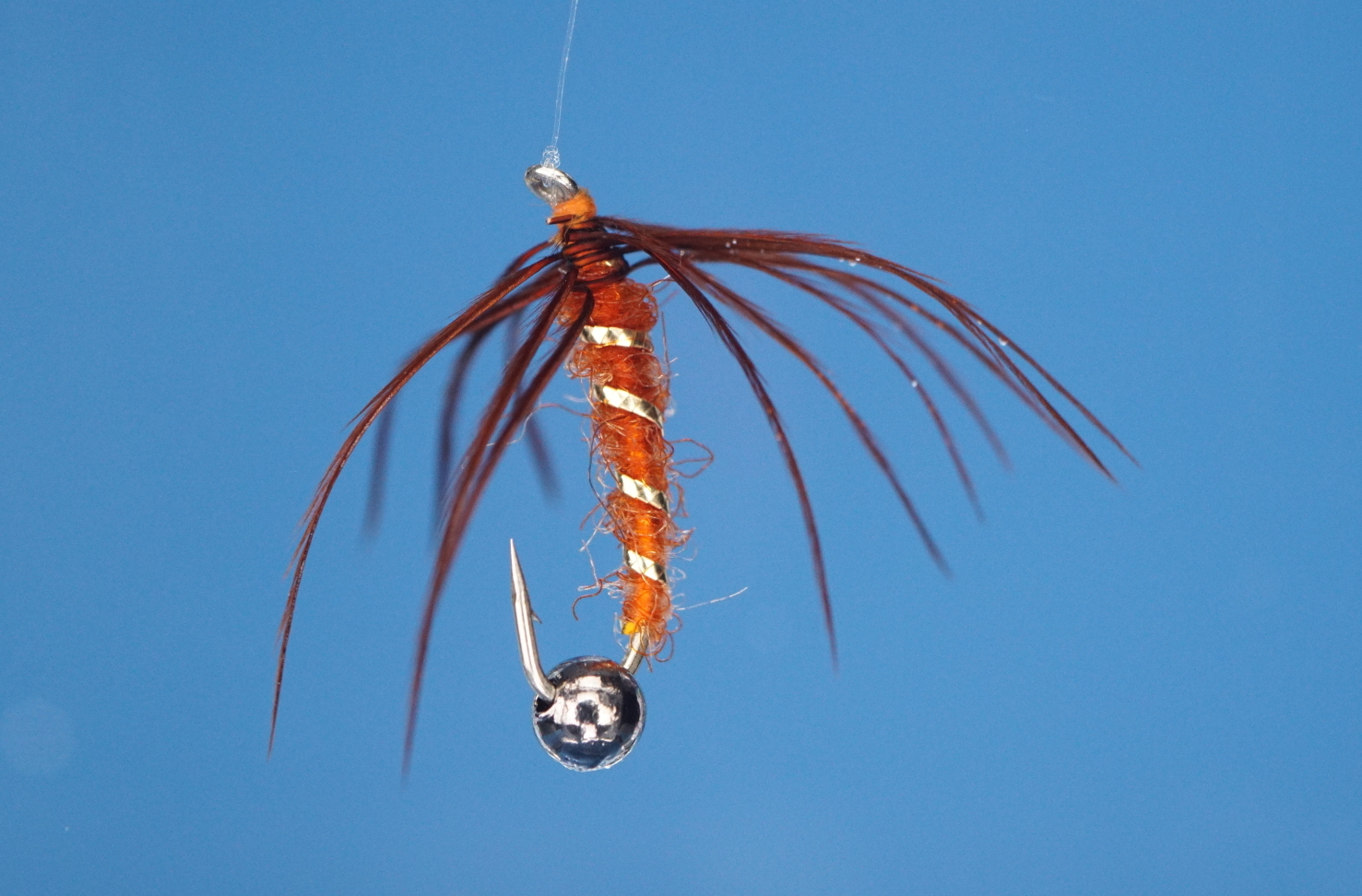
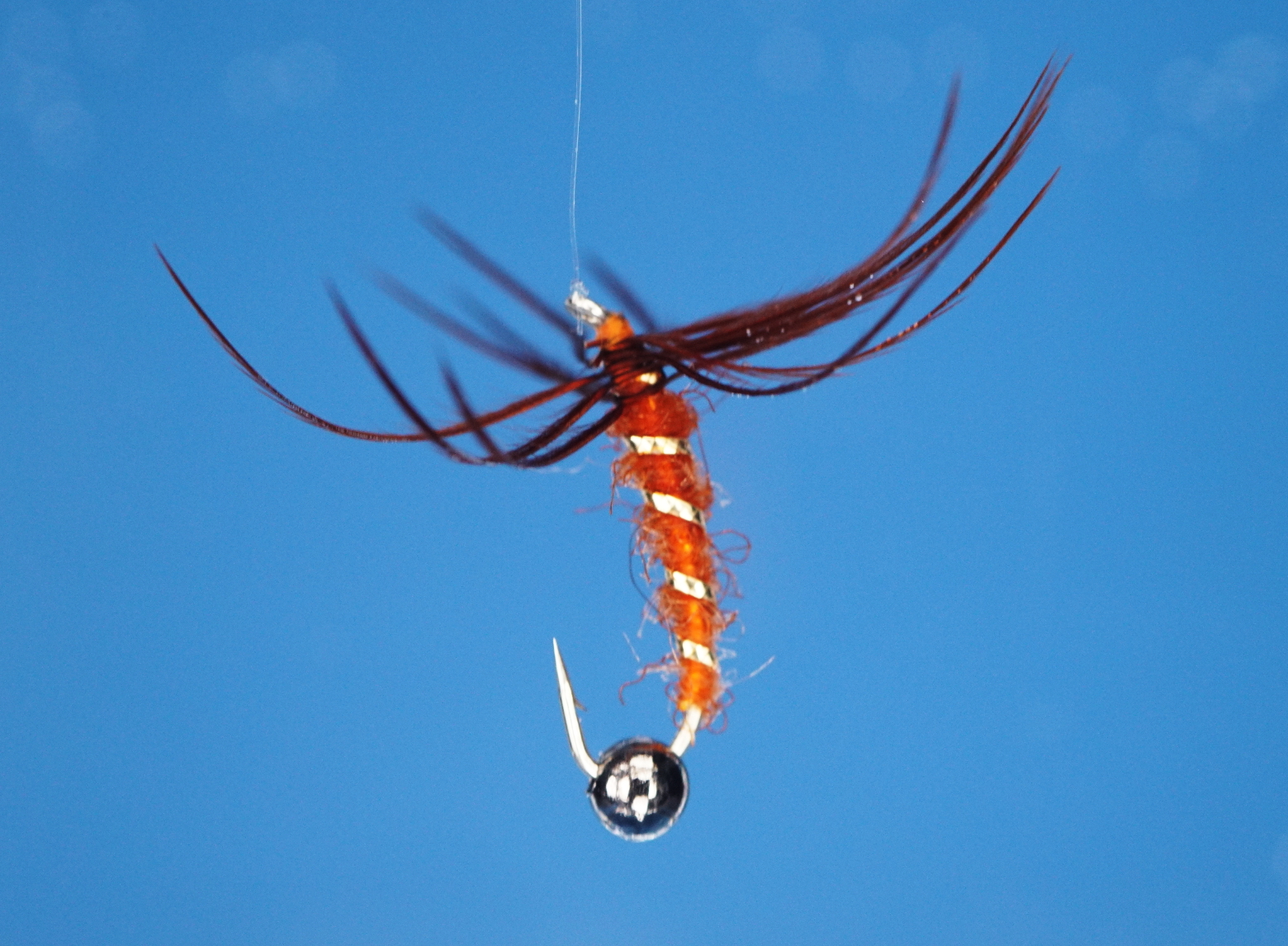
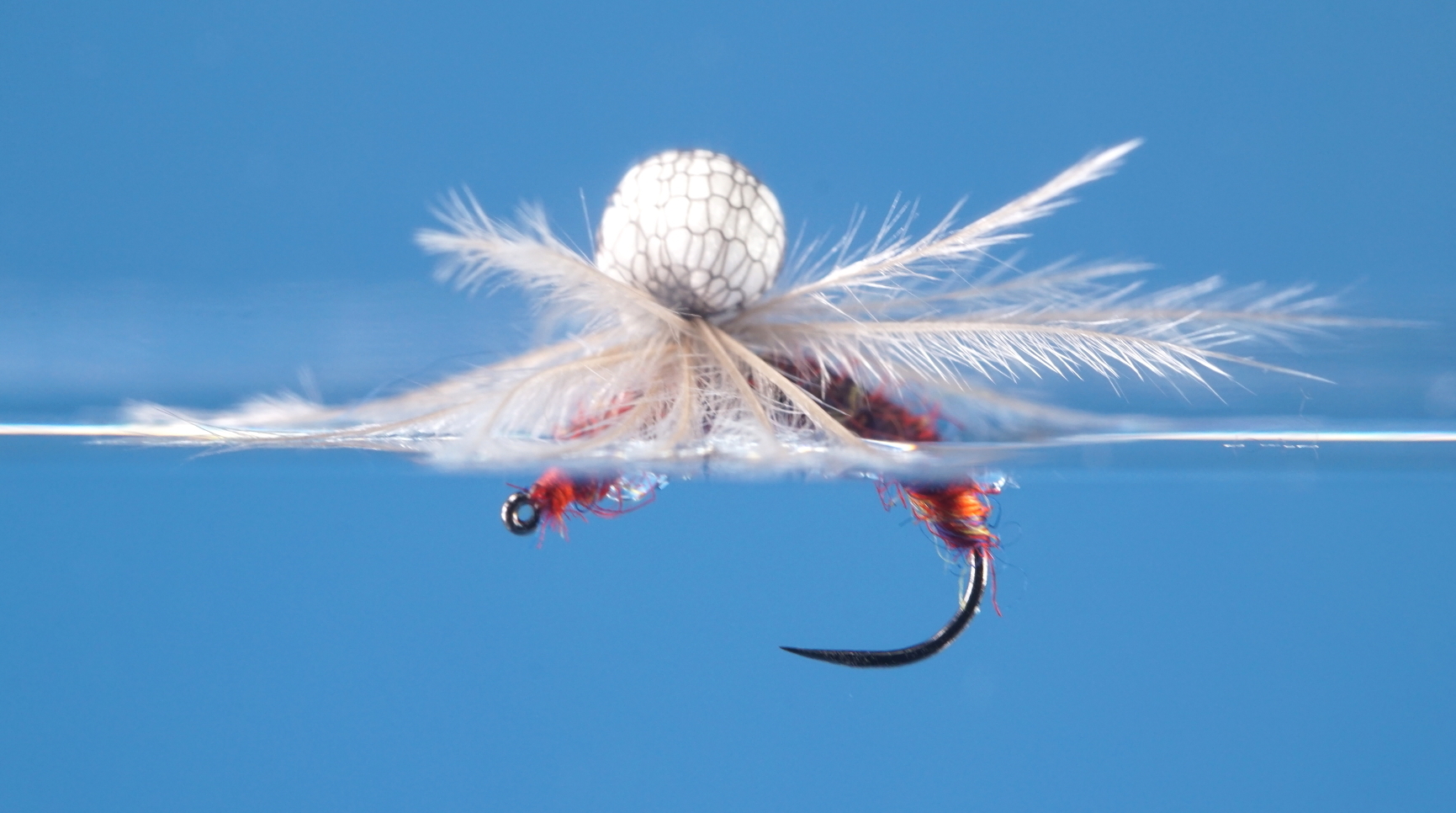
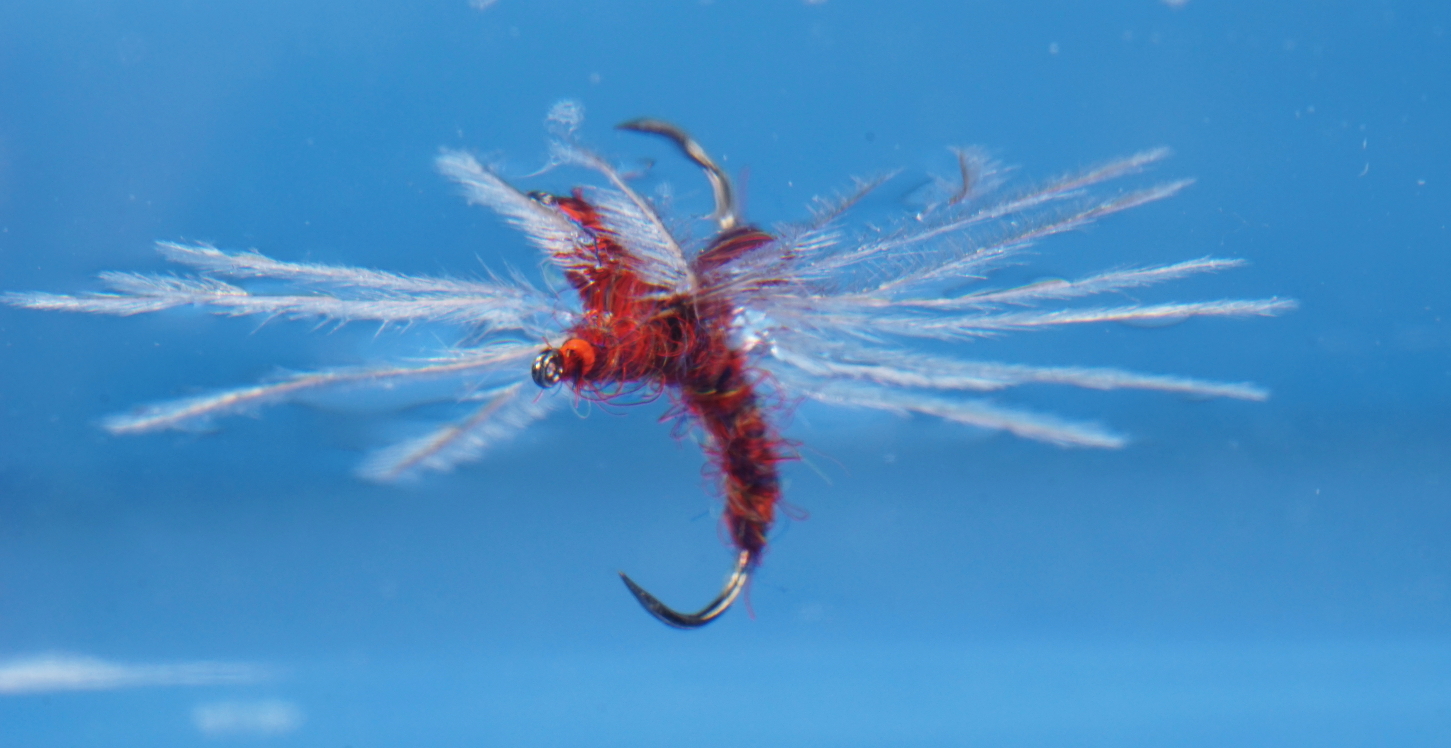
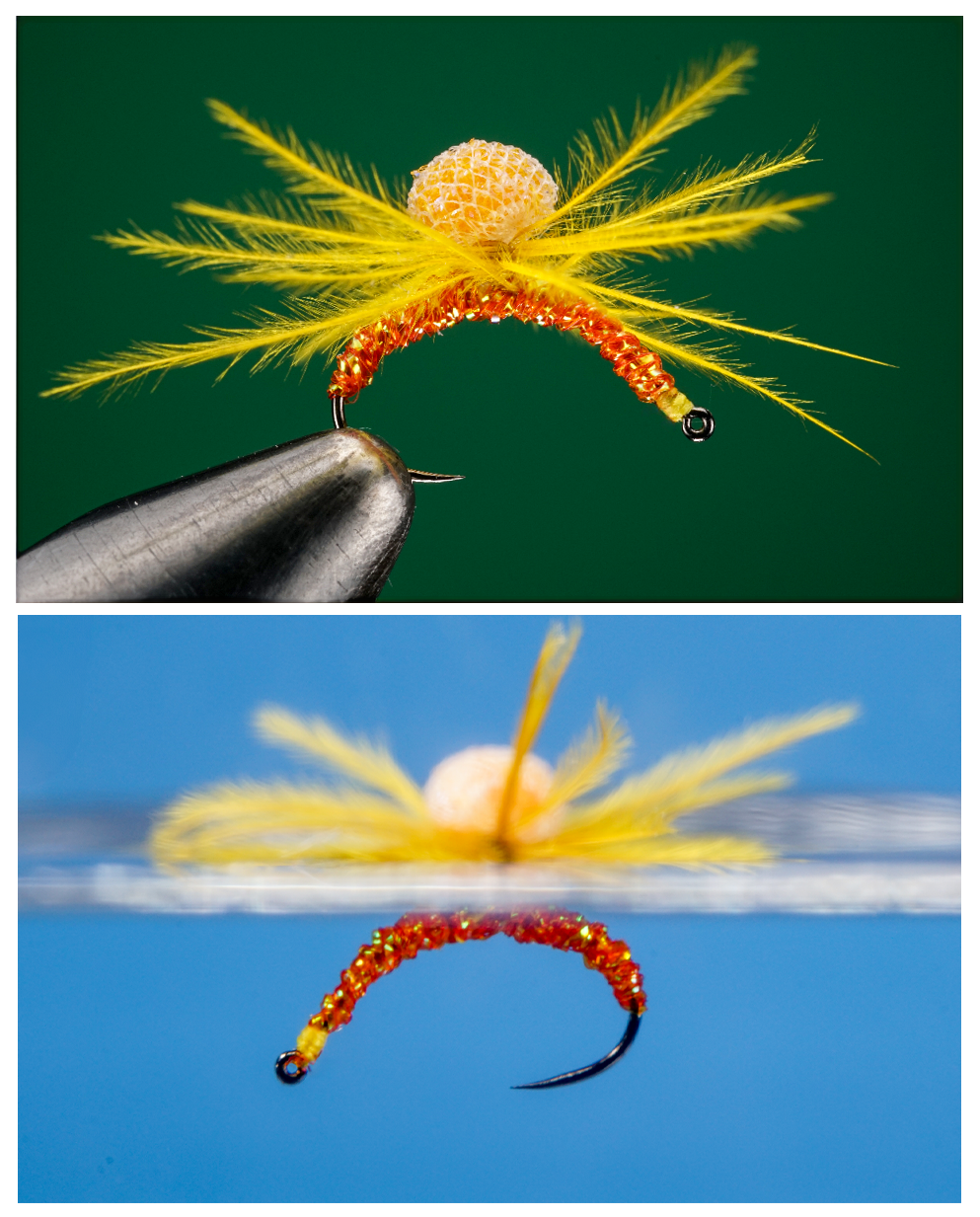
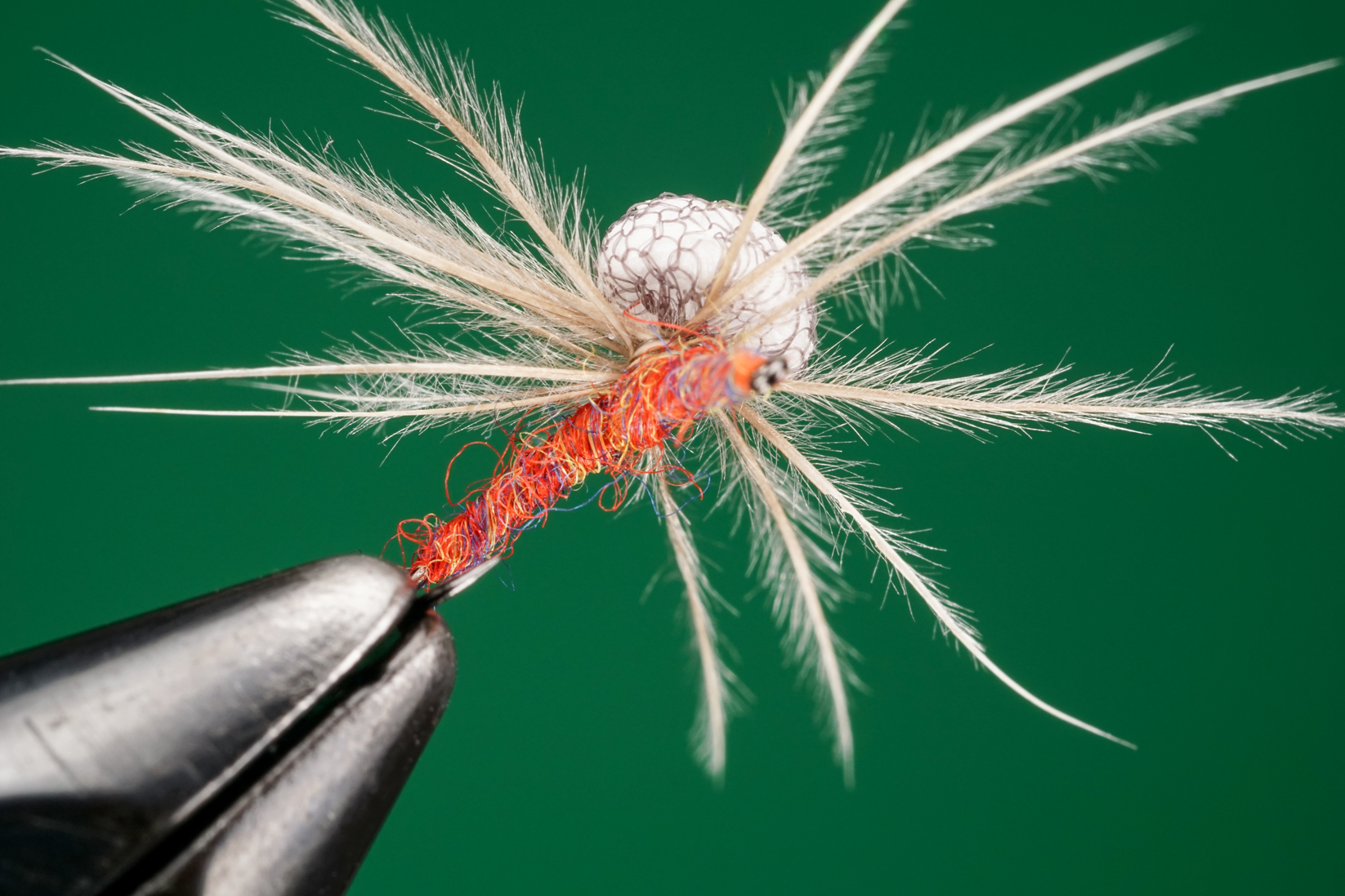
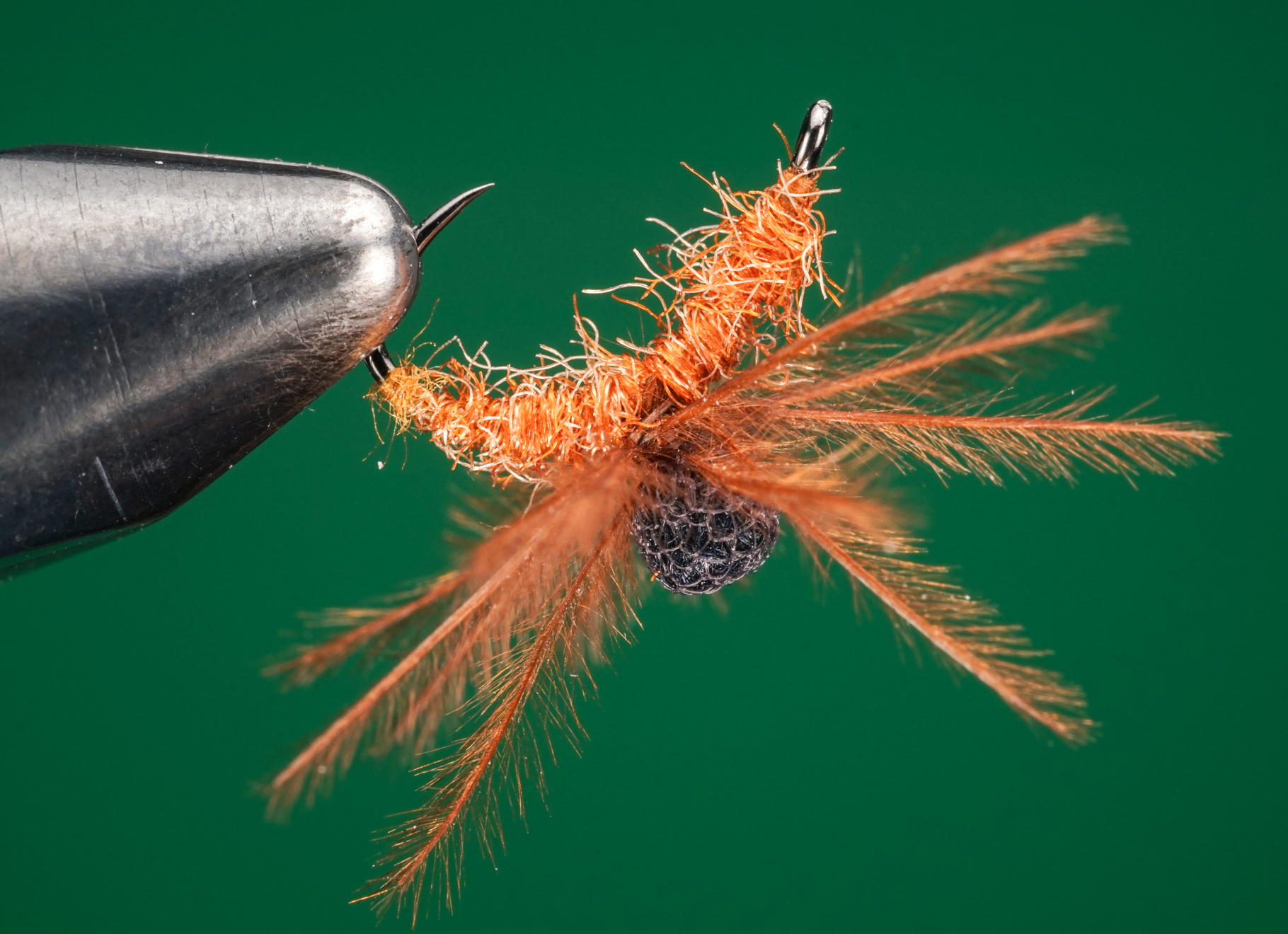
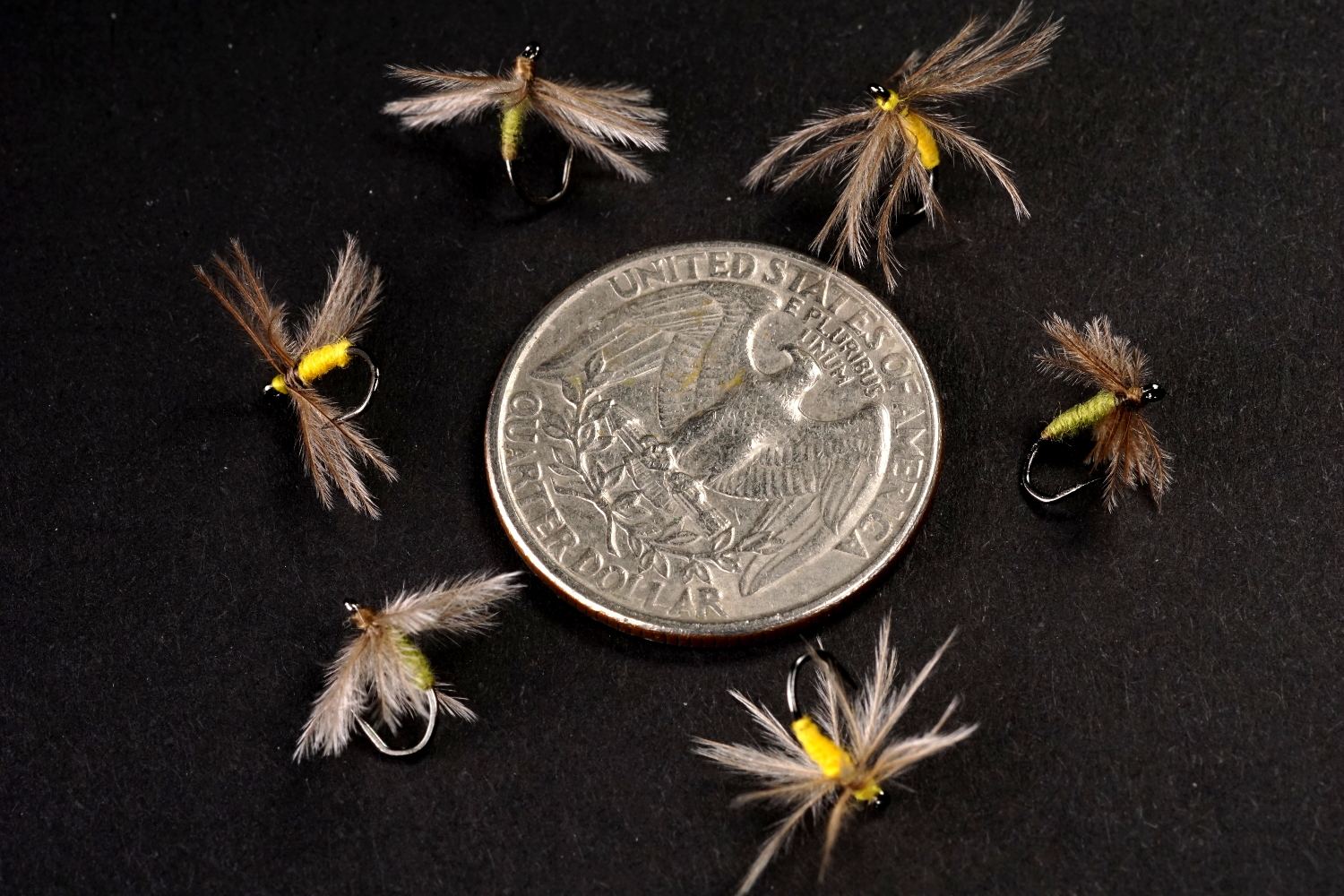
The precise origins of the dry fly are unclear. It is accepted that around the 1850s the concept was under active development. What is clear, however, is that the distinctly different physical properties of rooster hackle, compared to the moorland game-birds of the day, altered the architecture of the imitation. In so doing, the dry fly indelibly bifurcated the history of fly fishing.
The traditional dry fly has been a sartorial application of rooster. The necessary addition of the tail proves it. Prior to rooster, most North Country spiders did not have tails. Tails on wet flies were, and still are, optional aesthetic appendages; they did not serve any structural function until the advent of rooster hackle.
Hackled rooster, unlike its soft predecessors, required a tripod geometry to float correctly. The addition of long stiff tails became a functional necessity for the new dry fly. This is a perfect example of how fly design required adaptation to accommodate the new physical properties of a stiff hackle. I posit that a structurally required architectural change denotes a new style, whereas aesthetic alteration suggests only a variation.
Just as rooster required the tripod geometry of a stiff tail, emu requires the bilateral keel and self-righting ballast of symmetry. Rooster gave birth to the dry fly. Yet its utility was exhausted by the end of the 19th century.
The tyranny is over. Emu Symmetricals give birth to a new hackle renaissance, disrupting the now-tired and comparatively linear hackles of old. This revival in hackling together with the improved footprint of the symmetricals will challenge modern patterns on selective trout, and trouters.
The Sakter & Catskill Style
Coming soon
Historically
Building on Ogden and Ronalds, Halford's meticulous study codified rooster as a dry fly hackle in 1886, though this radical idea did not catch on right away. It took anglers another 20 to 30 years to warm up to the idea of a floating fly. Not everyone did. But once the early converts came around, they would zealously declared the sunken fly is undignified for a civilized gentleman. By the 1920s, evidence of early versions of parachuted hackle were undergoing parallel development.
Vincent Marinaro, in his 1950 seminal work, A Modern Dry Fly Code, improved the dry fly with his Thorax style. This was the logical evolution of the traditionally hackled dry fly. Pushing the hackle further back on the shank ironically paved the way—and granted creative license—for the next generation of hackle-less flies.
The reign of the hackled dry fly peaked in the late 1950s. Since then, there has been a subtle and steady erosion in the popularity of traditionally hackled dries. By the early 1960s, innovative tyers were doing away with hackles altogether.
Fran Betters' 'Usual' replaced rooster with snowshoe. In the early 1970s, Swisher & Richards replaced the rooster with nothing at all, leaving only a reclined quill wing. Their reductionist pattern was aptly named the 'No-Hackle.' That bold, apropos title captured the emerging zeitgeist around rooster.
Shortly thereafter, Caucci & Nastasi opted for coastal deer hair over rooster for their opus, Comparaduns. From an art history perspective, these major shifts in thinking and design solidified the unofficial, though palpable, 'anti-hackle' movement.
Since then, Cul de Canard, hairs, and poly-yarn have dominated the dry fly landscape. This may be a testament to the completeness of existing styles. Or, more likely, it reflects the absence of better options. The proliferation of alternatives to rooster strongly suggests that materials are more limiting than the tyer’s creativity in applying them.
Today
A review of literature reveals barely a mention of this dynamic feather. Emu plumage have been hiding in plain sight. They have been readily available to tyers, globally, since the Kennedy Administration.
The use of emu as a hackle was first brought into tying consciousness by Bob Quigley in a 2005 Fly Fisherman article. He used the emu feather for his namesake Quigley Cripple.
While he was definitely onto something, his selection of feather was too arbitrary, and the wrapping technique was still incomplete. As you will find, the result was functionally impaired. To be clear, Quigley is a creative pioneer upon whose shoulders we all stand.
Emu hackle, however, did not catch on. Despite the continued popularity of Quigley's Cripple, later iterations and references call for rooster. In the absence of proper wrapping techniques, emu has eluded trouters and authors alike.
Looking Ahead
The tyer needs to shelve his centuries-old muscle memory and resist imposing old methods onto his new hackle. When the tyer works with the feather in the way that the feather wants to be worked, he will soon master the new techniques of hackling with emu. Those tyers with plasticity at the vise will be handsomely rewarded.
Without caveat or qualification, emu is the most meaningful addition to the tyer’s chest of materials in centuries. Emu has done for spiders what W.C. Stewart and later standard-bearer Sylvester Nemes could not: dramatically improve upon the soft hackled fly in both form and function. This volume will prove that emu is the most dynamic and alive soft hackle, full stop. In a unifying and historically fitting way, the best soft hackle may turn out to be the best dry fly hackle as well.
So much of our tying and angling history revolves around the addition of a “new” stiff hackle. That mere addition created two divergent schools of thought that continue to inform our current practices and prejudices. As practitioners begin to reach for emu instead of entrenched hackles, the feather’s place and primacy will become self-evident.
Not since the stiff hackles of chalk stream nobility traveled to the New World in the letters to Gordon, has the tyer had a new option of soft or dry hackle. Emu is a disguised hackle no longer. It is a Goldilocks in the pantheon of our tying hackles. The stripped feather is like a new instrument in the hands of an old musician. With it, the tyer may compose new melodies with which to charm his cherished trout.
Introduction to Chapter 2
The Emu Emancipation
In the study of liberalism, historian Francis Fukuyama proposed a controversial thesis: "The End of History." That provocative argument set the world of political science abuzz. Later, Harvard historian Samuel Huntington responded with a retort cleverly titled "The Clash of Civilizations." In the thirty-plus years since Fukuyama's declaration, the rate of change has only accelerated. The static argument failed spectacularly.
Emu represents a similar "Clash of Hackles" in the eye of history, and in the minds of tyers. I submit that the material record of our art is incomplete. The story of fly tying is anything but over—it is alive, well, and continues to evolve. Emu, along with symmetry, represent liberating protagonists that will unsettle the calcified doctrine.
In the world of fly tying, distinct from angling, we sometimes encounter a mentality that aligns more closely with the "End of History" model. Some traditionalists and institutionalists have been lulled into that persuasion; a narrative holding that Gordon was not just the starting point of American fly tying, but also the terminus.
The distinction is an orthodoxy holding that successive efforts must be in the service of protecting that lineage, rather than building upon it. Like the trout succumbing to the symmetrical, some recalcitrants will fall prey to the metaphoric foreshortening of a biased perspective.
To be clear, this is not a history book. To the contrary, it is a treatise that heralds the next bifurcation of angling. To lay the foundation requires reanalysis of the historical perspective. The argument would not be successful if it did not also raise some eyebrows and ruffle some feathers.
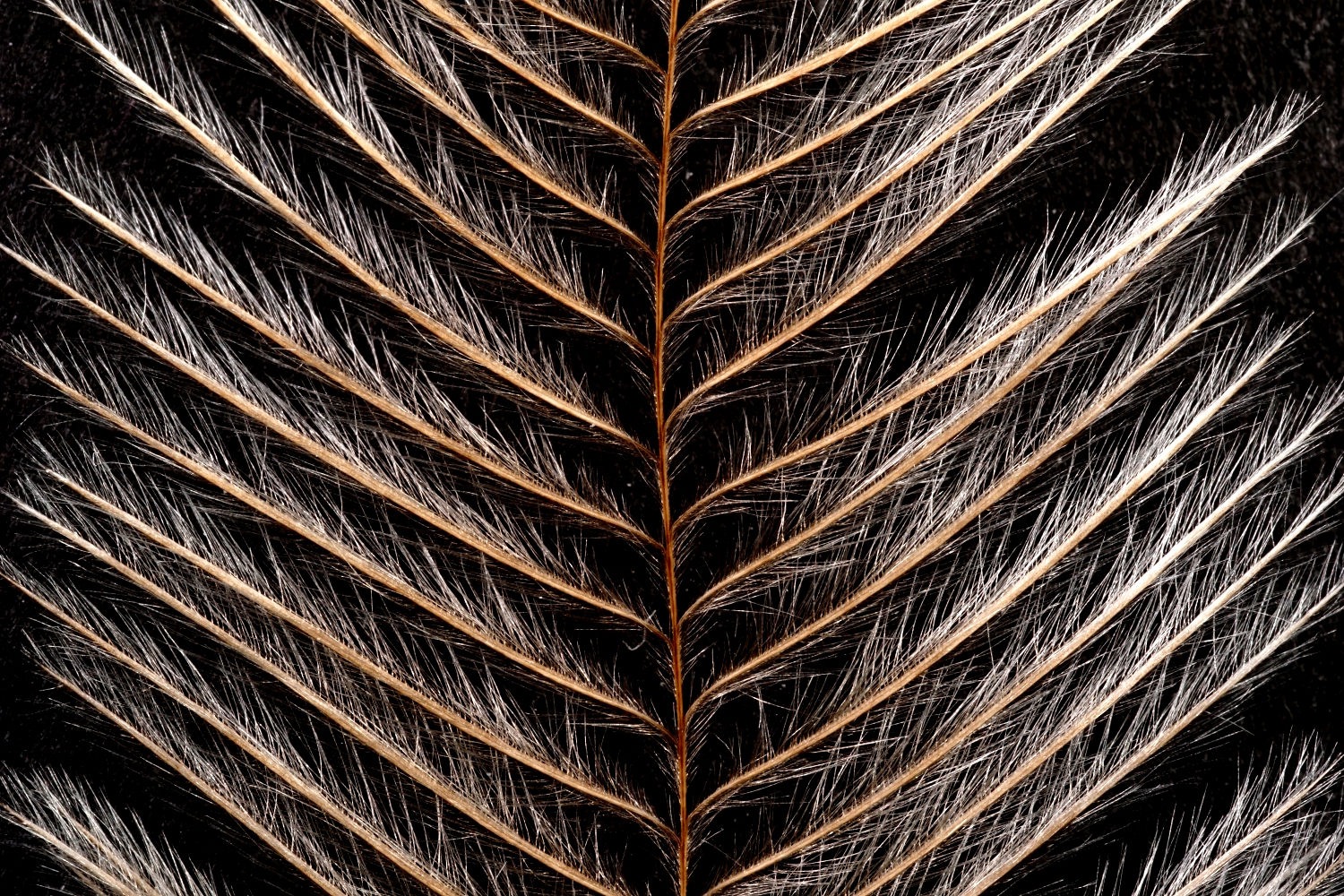
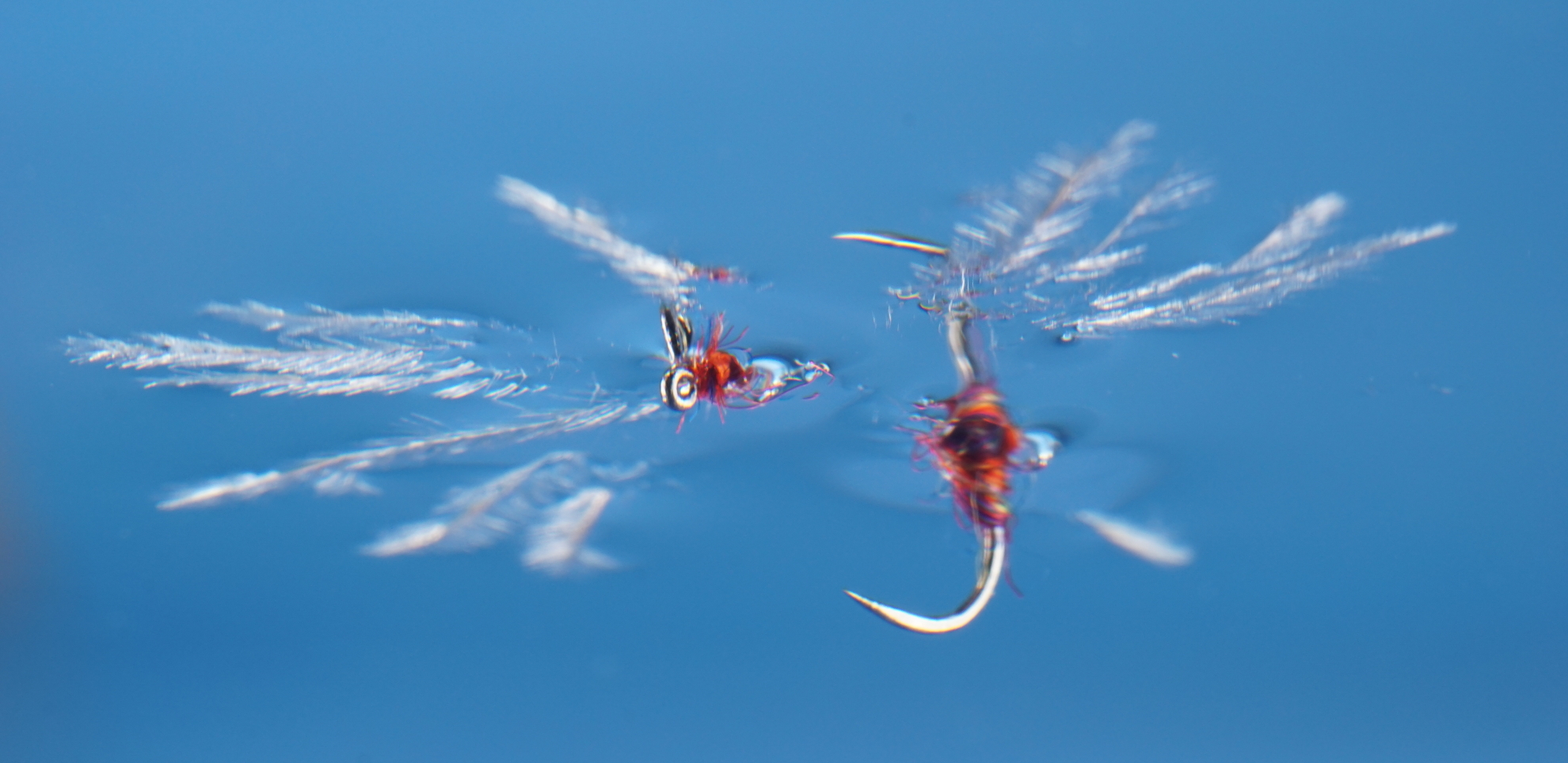
The balance of this chapter will photographically compare emu hackle to rooster, hen, partridge, and even CDC. This comparative analysis will focus on the hackle behavior and appearance, above and below the surface. These images will illustrate the differences and the objective superiority of emu.
The entirety of this volume will exalt—in granular detail—the previously hidden virtues of emu hackle. As you will see, it will outperform its predecessors more frequently than Pareto would predict.
However, emu is not a panacea. It is therefore even more important to state clearly and early what the limitations are, and where emu fails compared to other material options.
The limitations of emuSize & Small Flies
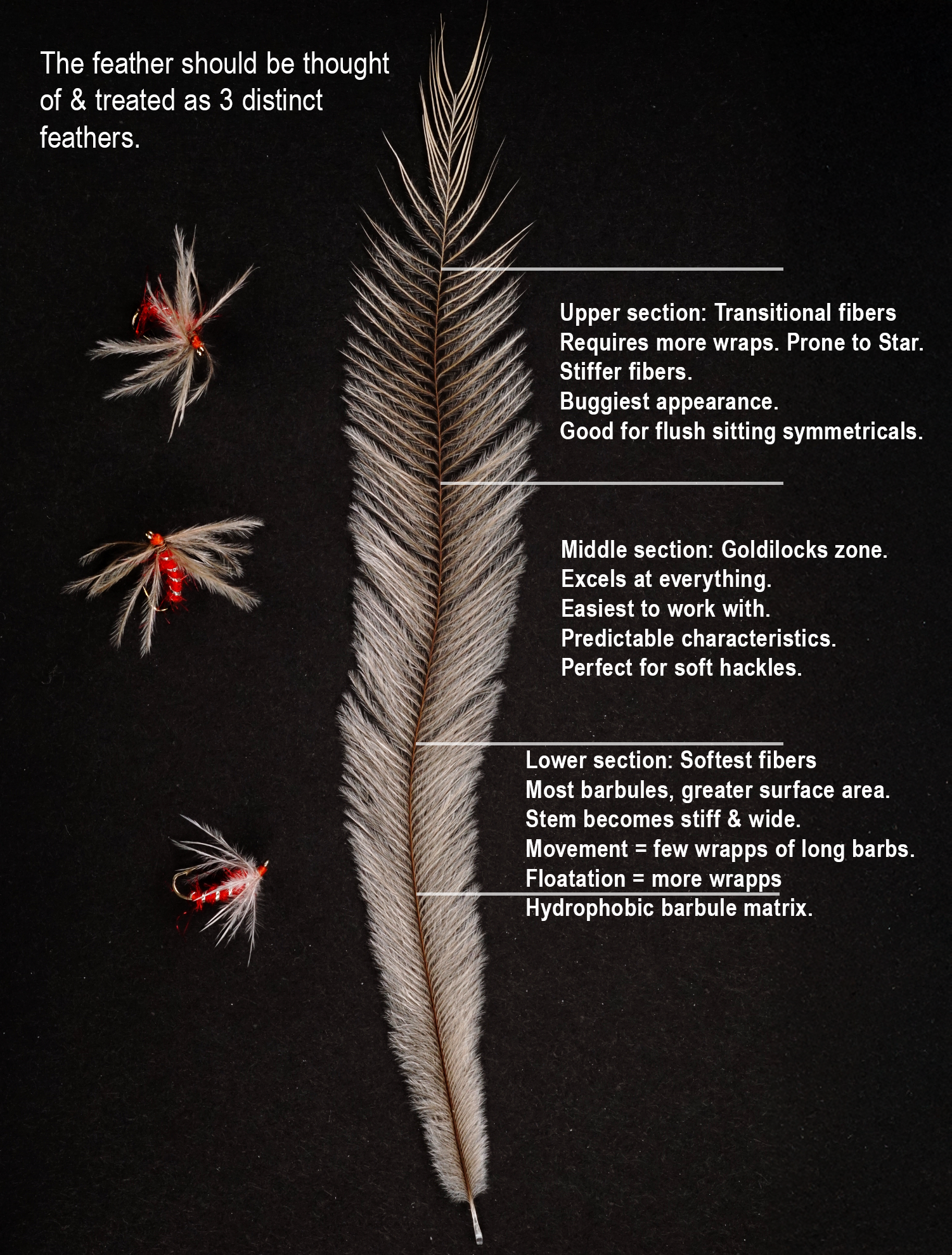
The first and most obvious limitation are small flies, anything below #16.The sweet spot for emu hackle is between #16 - #10. The problem is that small emu hackles have disproportionately rigid stems compared to larger feathers. Smaller emu barbs also have rounder tips and are too short to flex. As the feathers get smaller, the advantageous physical properties diminish. That is even when desirable fibers are identified, the width and thickness of the stem makes the necessary number of wraps unachievable in a small space. The amount of usable feathers for a #18 hook will be few. Therefore, acting as a hackle, emu is a poor choice for very small flies.
Consistency & "Box Appeal"
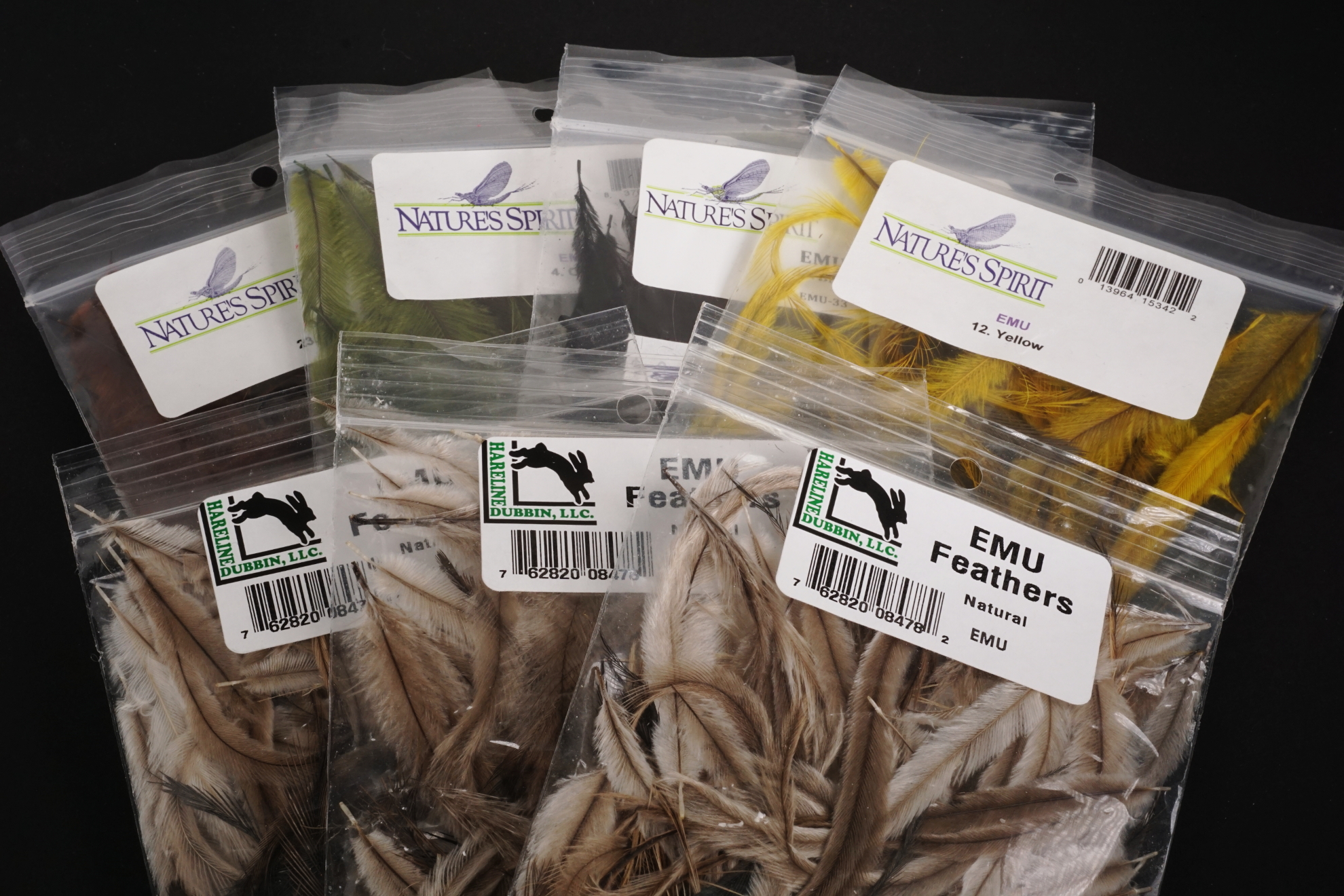
Have you noticed how even bad art looks better after it's been matted and framed? This phenomenon carries over to flies as well. Even an ugly fly as long as it is alongside six of its littermates, they start to look less bad. Unlike the chicken, emu leather is an exotic. For this reason, emu feathers are sold loose. A silver lining is that many of the feathers on the market were shed from happy, healthy birds that will continue to provide sustainable plumage for years to come. Because of this, the "box appeal" is much harder to achieve. Embrace the variation, it is an asset. Because of the way feathers are harvested and sold, no two Symmetricals will look exactly alike.
Cost & Selection
If you thought a Metz or Hoffman cape was expensive, think again. On a per feather basis, emu is substantially more expensive than the angling's most elite purple-blooded, crowned cock. Currently, this is less a function of supply and demand, rather it results from a lack of awareness. While prices fluctuate, consider that, currently, you may only get 10 usable feathers out of a bag containing 30. Those 10 good feathers might be perfect for size #12, but too big for the size #16 flies you wanted to tie. Anticipating this limitation means ordering 3 - 5 bags from 3 - 5 different retailers to achieve the greatest diversity in selection.
For this reason and when possible, I recommend serious tyers attempt to source feathers from local, friendly farmers, at least until material companies provide more usable feathers, and fewer throwaways. Understand that feather selection has everything to do with the final fly. If purchasing retail bags of emu, be prepared to pre-sort them and discard a substantial amount. One mitigating factor of this annoyance is that once you get the hang of tying with emu, you should be able to get 2 - 4 flies out of a single feather—as long as you are not tying them to pose nicely for their portrait.
The Bugger TrapFor reasons that will become painfully obvious, emu is a terrible choice for palmering or winging. Rooster, saddle, and schlappen remain far superior options in this domain.
Barbule VelcroThose crass t-shirts that say: "doesn't play nice with others" can be applied to emu hackle, not to be confused with the birds themselves, which are actually quite well natured. The barbules that are responsible for so much of the magic will cling to materials, especially synthetics. The reader will notice that none of the presented soft hackles have wings, or other auxiliary materials. Not only does it not look good, both the wing and the hackle interfere with each other's desired effect. From my experience, emu hackle is a jealous diva, most effective when presented as the marquee feature.
Symmetrical Dry Fly Hook Selection
This is not a limitation of emu, but rather a limitation of optimally curved and balanced dry fly hooks. This will be easily ameliorated by hook manufacturer response to consumer demand. Most deeply curved hooks are heavy wire, aligning with optimal beadhead construction. Currently the best shaped hook for dry fly symmetricals is the Gamakatsu C15BV. The main drawback to this particular hook is the ultralight wire that may be too light for some larger trout waters.
The vertical eye of this hook has three advantages. It helps avoiding accidental barb-ensnarement while knotting-tippet mid-hatch, with your eyes on the water. I also think it provides better hook sets, and better technical drifts when paired with a loop knot. I will expand on hook considerations in the tying chapters. But for now I recommend the following hooks for symmetrical dry flies: Firehole 315, and Firehole 413.