|
|
About
|
|
Background
Mark has spent over 30 years fly
fishing the fabled rivers of the
Catskill Mountains. When he was
just 14, as is so often the custom
in fly fishing, some of the local
masters took him under their
wings.
These were
some of the leading figures and
thinkers in the world of fly
fishing and fly tying. For years,
Mark had the privilege to draw
upon their collective experience
and expertise. This allowed him to
grow exponentially as a tyer and
angler at an early age.
They
conferred to him a pedigree rich
in history and tradition. Mark learned
to dress flies with materials that
came off the desk of the legendary
Harry Darbee;
a desk now enshrined behind glass
at the Catskill Fly Fishing Center
& Museum (CFFCM).
The late Ralph Graves was Mark's
first fly tying mentor. Over
several years, Graves honed Mark's
early fly tying skills. Graves
shared his expertise on wet flies
and his wisdom on catching large
trout. Mark's love of wet flies is
a direct influence of Graves'
early teachings.
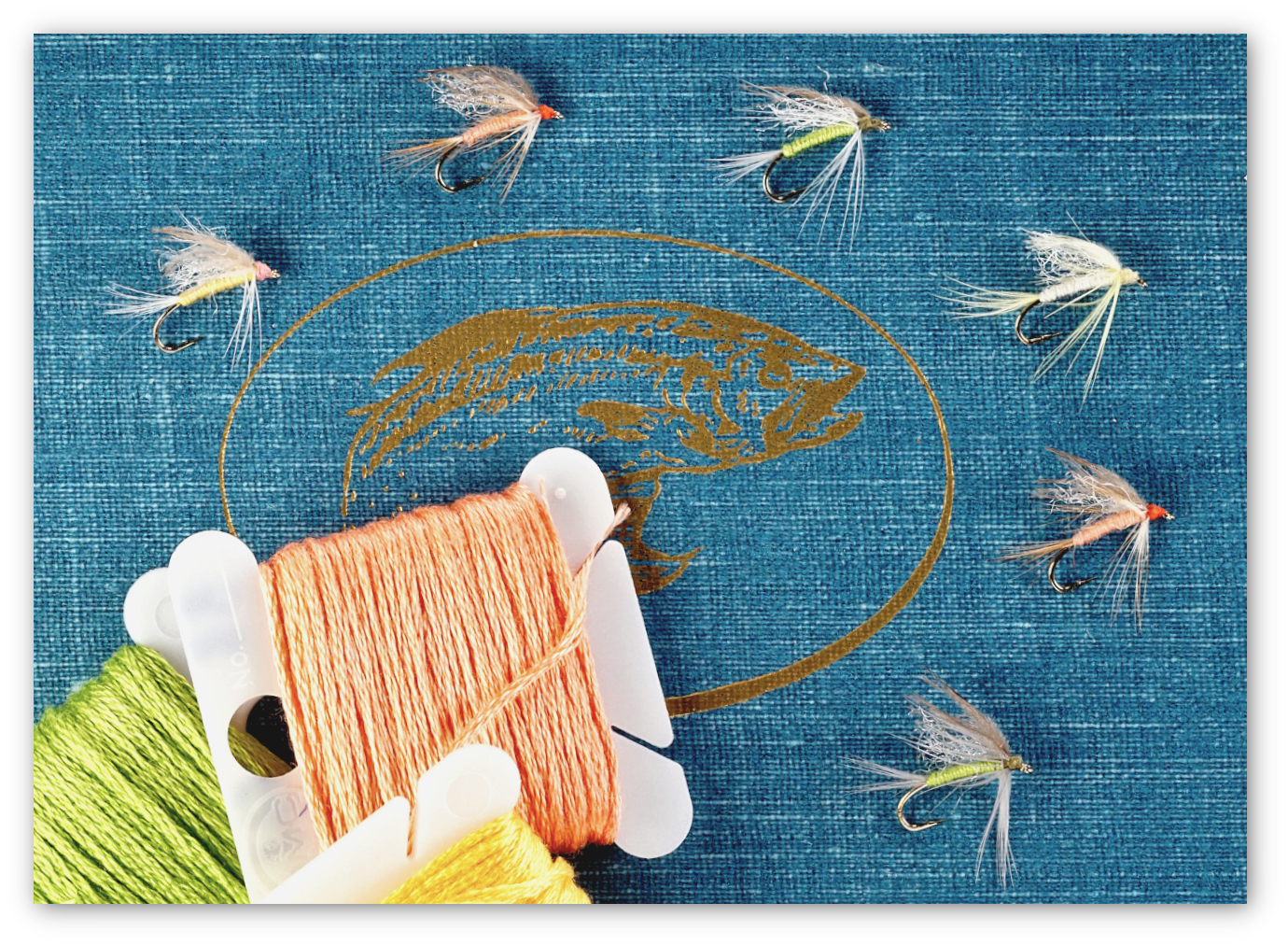
Later, Mark spent four years
apprenticing with a close friend,
neighbor, and angling disciple of
Ray
Bergman. This is where Mark
was encouraged to endeavor upon
creative and artistic fly tying.
Here he learned the importance of
unique fly patterns and unorthodox
techniques of presentation. It was
at this time and through these
lessons that fly fishing
transformed from method to art.
This apprenticeship was
profoundly influential in shaping
Mark's fly tying and
angling worldview.
(Donegal's was the center of creativity in the Catskills. Everyone knew it, not everyone liked it. It was a countercultural oasis in the fossilized desert of American angling's birthplace. I was a fly on the wall as local authors, Art Lee and Poul Jorgensen, would come in to talk about their latest ideas, or exaggerate their latest accomplishments.
The atmosphere was elegant and refined. The pedagogy was an inspired, spontaneous crucible of applied curiosity, oscillating between classic salmon dress and trout fly redress. When Paul held court, he was a magnet for spirited discussion, as complex and nuanced as the background Vivaldi.
Paul Filippone remains one of angling's most innovative and charismatic icons. Aside from Edward R. Hewitt, more novelty, heart, and uninhibited experimentation came out of that hub, thanks to Filippone, than the regional tying history that preceded it. Paul was an artist while his predecessors were archivists.
If you're not careful, the emerald Catskills can become a quicksand for creativity. Learning from Paul was like learning to dance from Zorba...at the steps to the gilded cathedral. When Donegal's closed, so did the life of the party in Roscoe. A relieved community of Gordonian monks returned to the familiar quiet of their recursive canon.
Rarely is history recognized in the moment. I did not have the length of perspective to describe the ideological lines that were being drawn. But I was there and watched them form. These fault lines could only emerge under pressure to the status quo by a waning orbit-of-influence. Convention holds that the tradition dictates the method. But for a brief period in Catskill fly fishing history, Donegal's flipped the script. The old guard felt threatened by the irreverent and divergent spirit that Filippone represented.
You could see it in the social fragmenting at events and gatherings. You could hear it in the careful diplomatic-speak of rhetorical hubris. Later you could read about it as a procession of anglers lamented online about the void Filippone left behind. Fly fishing courses through the veins of Rosconians the way the freestones innervate their mountains. Their historical grasp is strong, as are their opinions. The "Cooks Falls Ire" is bestowed upon perceived disrupters to the established order.)
By the time Mark was just 16, his
talent as a fly tyer had not gone
unnoticed. He received the
distinguishing honor of being
asked to be a guest fly tyer at
the Catskill Fly Fishing Center
and Museum. Mark continued to be a
guest tyer at the museum until he
began college in the late 90's.
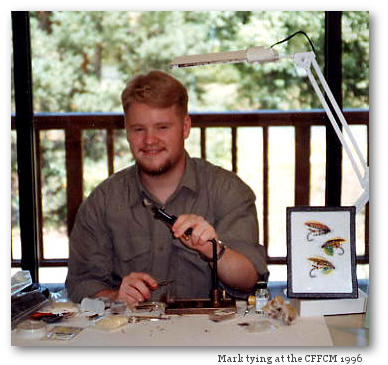
One of the pitfalls of fishing in
an area so hallowed with
tradition, is the natural
inclination to follow in the
customs of the past. Despite his
training steeped in the classics,
you will not find Mark fishing
with traditional Catskill flies.
Instead, he will probably be
experimenting with one of his new
impressionistic patterns. Mark continues
to innovate with new fly patterns
and materials. He continues to
believe in the importance of
showing "educated" trout unique
patterns. Another of Mark's passions is black and white street photography.
Mark's
Fly Fishing CV
|
1992 -
94
|
Studied
under Catskill legend
Ralph
Graves, Old Glory Fly
Shop. Roscoe, NY
|
|
1994 -
97
|
Apprenticed
with renowned classic
salmon fly
tyer Paul Filippone,
Donegal's. Roscoe, NY
|
|
1994 -
97
|
Member:
Catskill Fly Tyers Guild
(CFTG)
|
|
1995 &
96
|
Guest
Fly Tyer: Catskill Fly
Fishing Center
& Museum (CFFCM)
|
|
1995 |
New
York State Dept. of
Environmental Conservation:
Guide
License # 3010
|
|
1996 |
Ramsey
Outdoor: Fly
fishing specialist &
casting instructor.
Ramsey, NJ
|
|
2003 |
Binghamton Univeristy.
BA Psychology, Minor Biology.
Concentration in Evolutionary Studies,
Under David Sloan Wilson
|
|
2015 -
|
|
|
2019
|
|
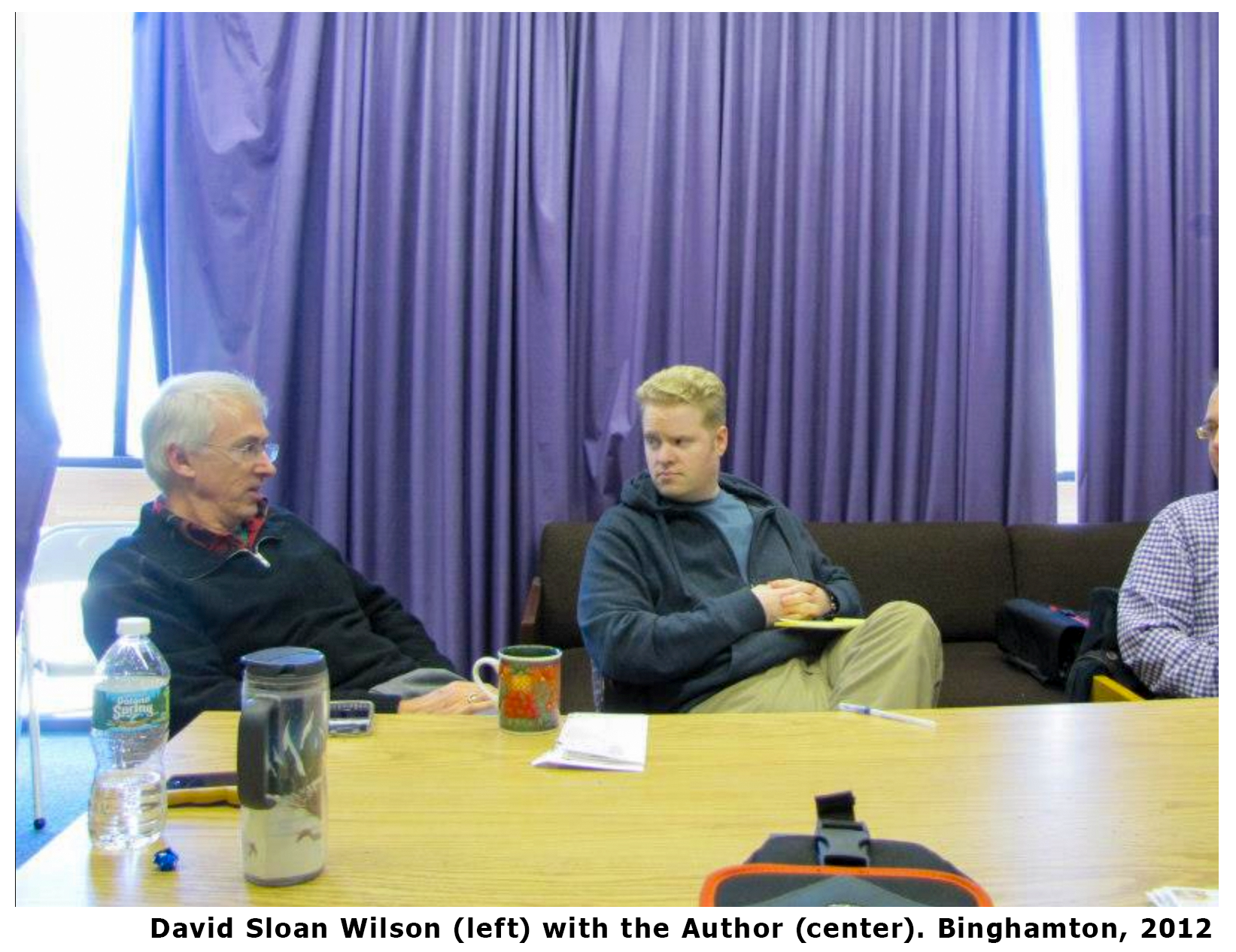
(As much as Filippone influenced my angling worldview, David Sloan Wilson informed my global one. I studied psychology because I wanted to understand the motivations that underlie behavior. I found the answer in the Biology Department, in what would soon become the prestigious—first in the Nation—Evolutionary Studies (EvoS) Program.
An interdisciplinary, unifying framework was being actively pioneered by DSW. I know a thing or two about recognizing a Sage when I see one. I latched onto Wilson's 'evolutionary toolkit' just like I invited myself to travel with Paul to the symposiums.
Many know Richard Dawkins for his outspoken views and provocative titles, such as "The Selfish Gene." DSW provides the intellectual rigor to counter Dawkins' reductionist interpretations. Dawkins fails because he declared conclusions before the epigenetic mechanisms were understood. He advocates a view of selfishness, while Wilson illustrated the presence and advantage of altruism.
DSW is an intellectual and academic Titan. He is also one of the kindest, humble, genuine personalities in academia. Despite finding Wilson late in my tenure, I continued to take graduate classes and seminars with him well after graduating. Finding a human wellspring of new-knowledge is the hard part; following them is an immense privilege.)
|
|
|
|
|
|
|
|
|